

How to Store and Reheat Leftover Roti Canai Flatbread
Introduction
You can effectively store and reheat roti canai by using airtight packaging and gentle, dry heat methods to maintain its signature flaky texture. Knowing how to properly store and reheat roti canai ensures that your leftovers remain as satisfying as when they were first cooked.
This article covers the best practices for preserving this Malaysian flatbread in both the refrigerator and the freezer. You will learn how to prevent moisture loss during storage and discover specific techniques for reheating your bread to restore its crisp, laminated layers. Whether you are batch-cooking for the week or saving a single piece for later, these methods help you avoid common issues like sogginess or dryness. By following these simple steps, you can enjoy high-quality results every time you reach for your stored flatbread.
Introduction to Roti Canai
You can effectively store and reheat roti canai by prioritizing moisture control and temperature management to protect its signature texture. Learning how to store and reheat roti canai properly allows you to enjoy the flaky, layered quality of this flatbread even after it has been stored.
This guide provides practical techniques to help you maintain the integrity of those delicate lamination layers. You will learn how to handle, package, and warm your flatbread to ensure the best possible results every time.
Maintaining Lamination Integrity
Proper storage is essential because the lamination layers provide the characteristic flaky structure that defines high-quality roti canai. These thin, alternating layers of dough and fat rely on a precise balance of texture to stay distinct. If moisture migrates improperly or if the layers are compressed during storage, they can fuse together, resulting in a dense or gummy product. Protecting this structure begins with cooling the flatbread completely before packing it, as trapped steam can quickly soften the crisp exterior. Using parchment paper between individual pieces helps prevent them from sticking, allowing you to maintain the separation of each layer until you are ready to serve.
Best Storage Techniques
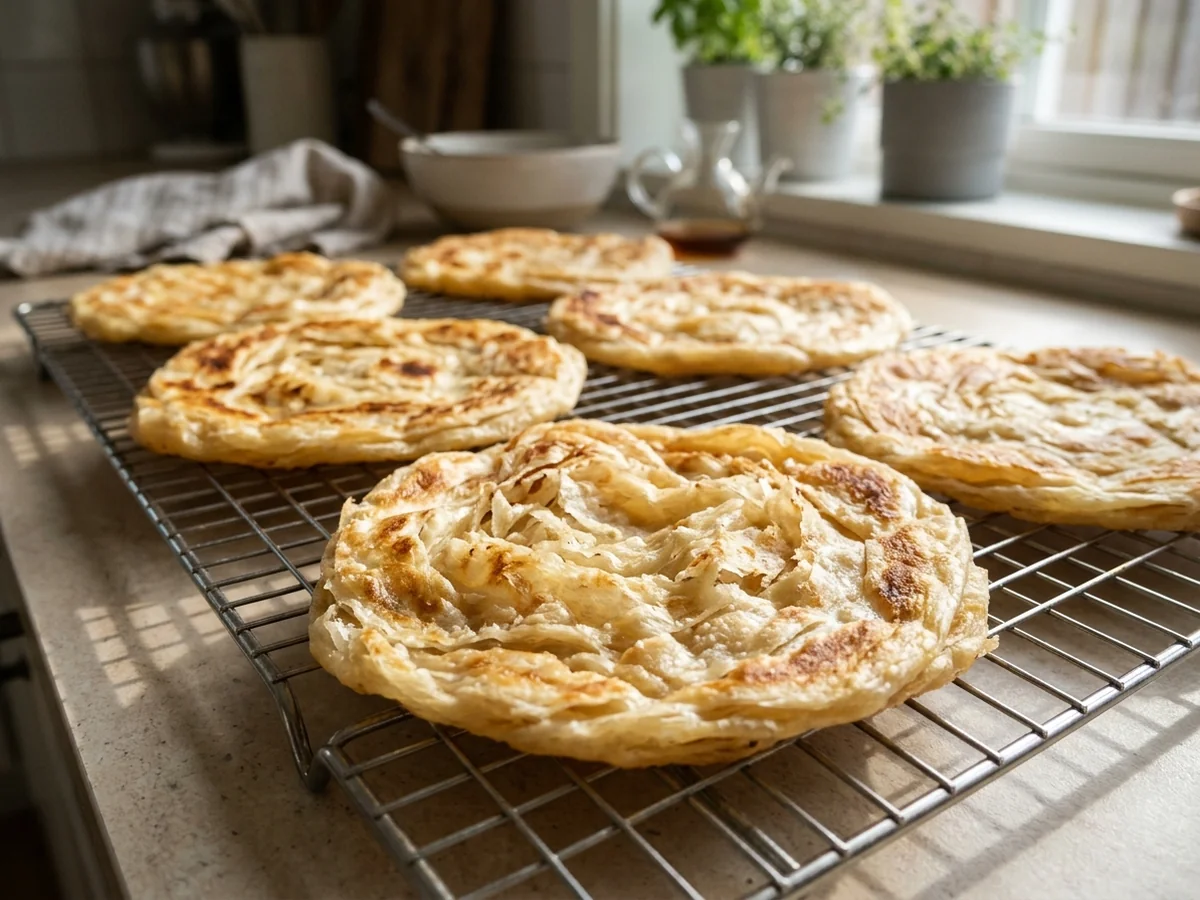
Properly preserving your flatbread relies on managing moisture and temperature to maintain the integrity of its layers. Follow these steps when storing cooked flatbread to ensure the best results for later enjoyment.
- Allow each piece to cool completely on a wire rack before packing it away to prevent condensation from creating a soggy texture.
- Place a sheet of parchment paper between every layer of bread to keep them from sticking together during freezing or refrigeration.
- Use a high-quality airtight food storage container to shield the bread from ambient odors and freezer burn.
- Seal the container tightly to minimize air exposure, which helps keep the bread from drying out over time.
- Consider using heavy-duty freezer bags for longer storage if you are limited on container space, ensuring you press out any excess air before sealing.
- Keep your prepared packages in the coldest part of your appliance to maintain consistent quality.
Managing Shelf Life

Keeping cooked flatbreads fresh requires careful temperature control and proper packaging to maintain their flaky texture. While short term needs are often met with refrigeration, long term preservation relies on the freezer to slow down quality degradation.
| Storage Location | Typical Duration |
|---|---|
| Refrigerator | Few days |
| Freezer | About one month |
Watch for signs of quality loss, such as a dry or brittle texture, an off odor, or visible freezer burn on the surface of the bread. If the layers feel mushy or fail to crisp up during the warming process, the integrity of the lamination has likely been compromised. Always store your flatbreads in an airtight container to prevent moisture migration and to protect them from absorbing odors from other items in your appliance. Properly cooled bread before packing helps avoid excess condensation.
Preserving Texture During Reheating
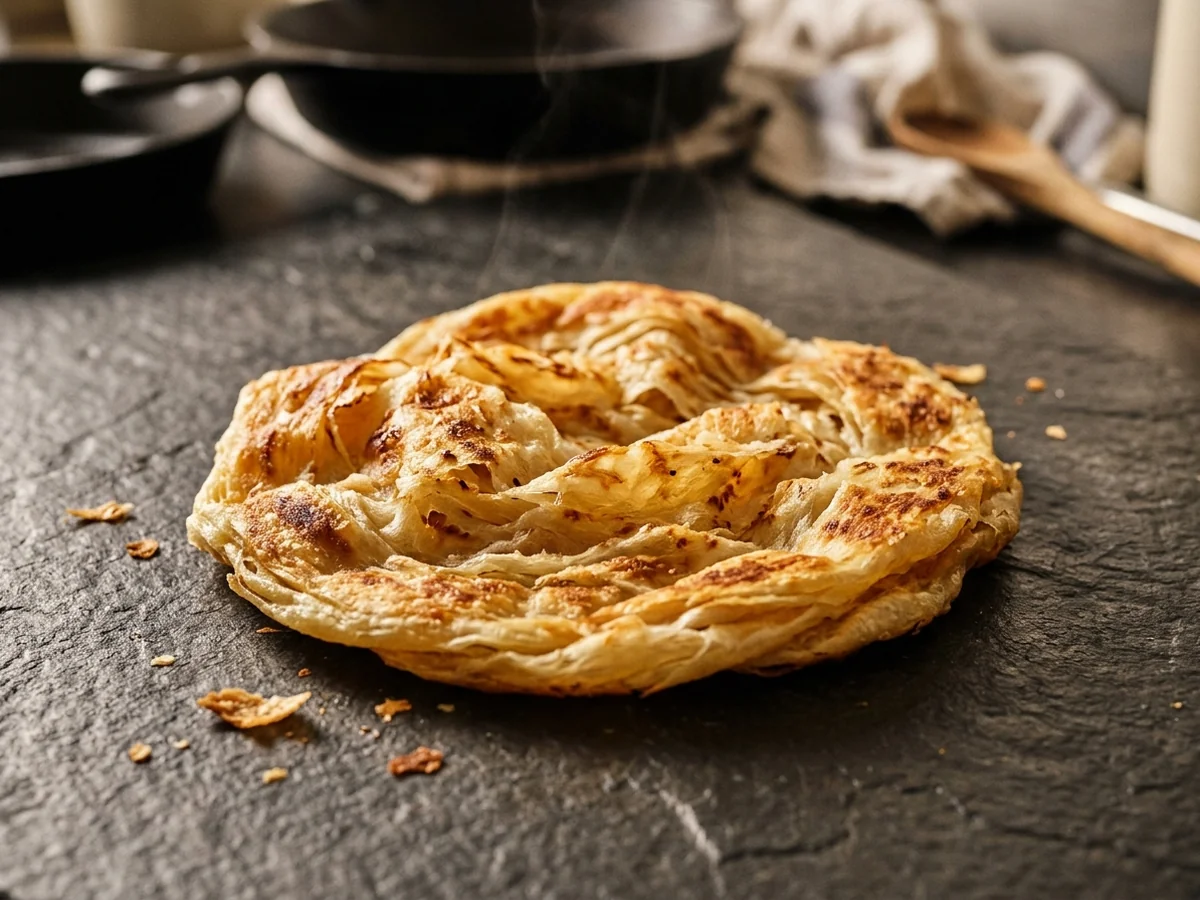
To keep your flatbread crispy, focus on managing heat and moisture levels during the warming process. The goal is to revive the Maillard reaction, a chemical process between amino acids and reducing sugars that gives browned food its distinct flavor and crunch.
Avoiding moisture migration is equally critical. If the bread retains too much water during storage, the layers lose their structural integrity and become soggy. You can prevent this by cooling the bread completely before packing it, which stops condensation from trapped steam.
Microwave reheating is often avoided because it encourages internal steam buildup. Instead of drying out the surface to create a crisp finish, microwave energy causes the moisture inside to soften the dough’s laminated layers. For the best result, opt for dry heat methods like a cast iron skillet, which effectively re-establishes that characteristic golden surface while keeping the interior tender.
Reheating Methods Compared
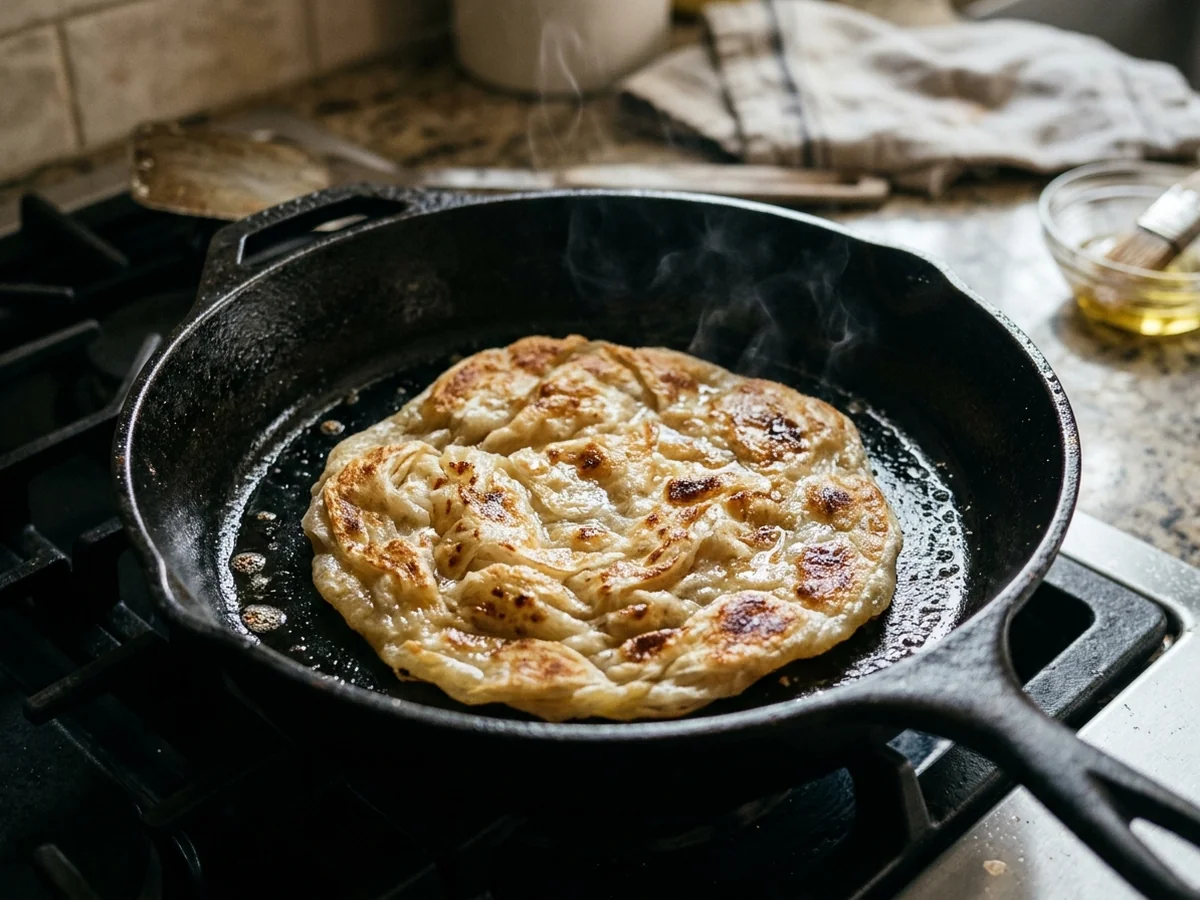
The best way to reheat malaysian bread is using a method that restores crispiness without drying out the delicate, flaky structure. You should prioritize techniques that apply dry heat to the surface to maintain the integrity of the lamination.
- A hot cast iron skillet works effectively to revive the exterior crunch of your flatbread by quickly heating the fat within the layers.
- Using a standard oven allows for even heat distribution, which is ideal if you are reheating multiple pieces at once.
- A toaster oven provides a convenient alternative for single servings, often heating through the laminated layers faster than a full-sized oven.
- When reheating frozen flatbread, it is helpful to let it thaw slightly to ensure the center reaches a safe temperature before the edges darken.
- Always monitor your heat source closely, as the thin, buttery layers can transition from perfectly crisp to burnt in a matter of seconds.
Common Reheating Mistakes
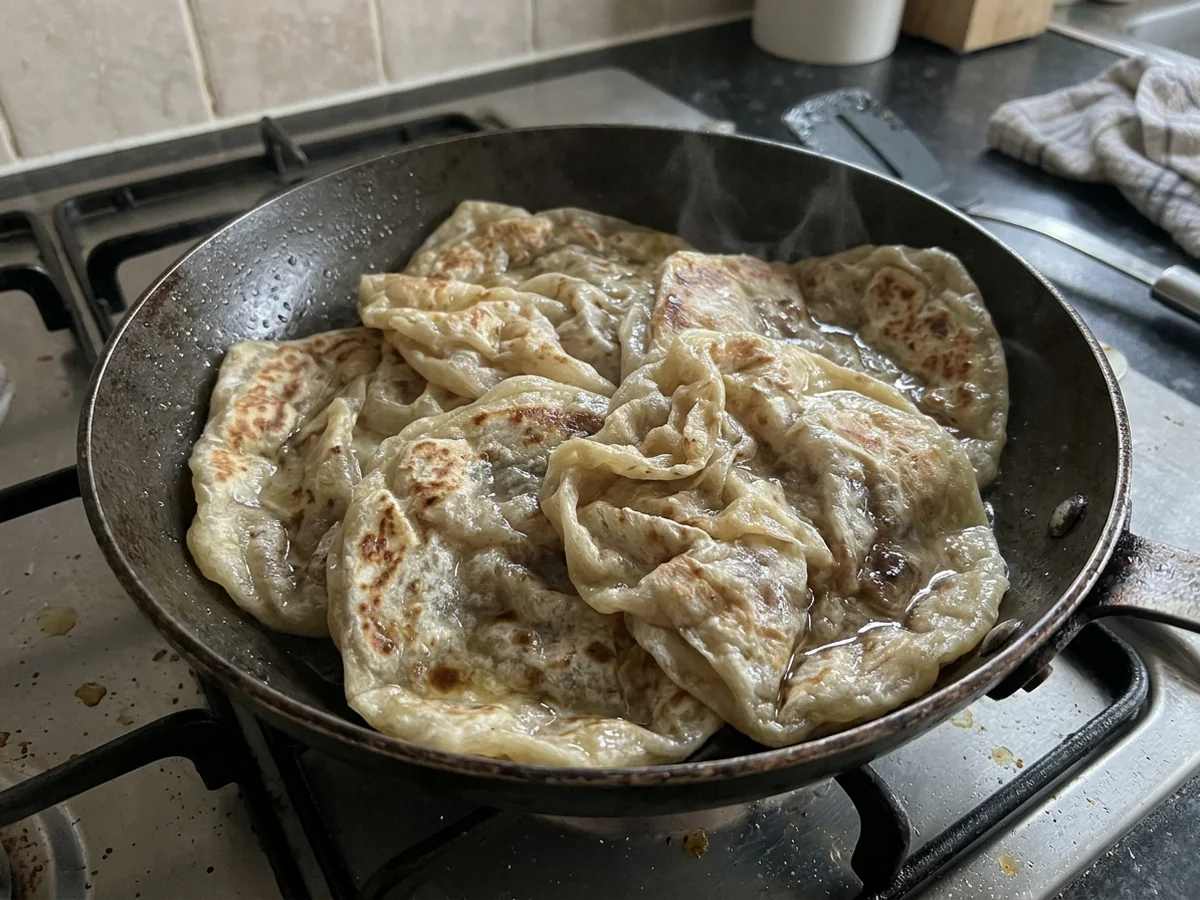
You can avoid common pitfalls that ruin the texture of your flatbread by adjusting your technique during the warming process. Avoiding these mistakes ensures the layers remain flaky and the edges stay crisp.
- Overcrowding the skillet prevents proper air circulation and traps steam, which often leads to a soft or soggy crust instead of a crispy finish.
- Using too much heat too quickly causes the exterior to burn before the interior has a chance to warm through completely.
- Failing to thaw properly before cooking creates uneven results, as the moisture inside the frozen center creates steam that softens the bread.
- Relying on high heat settings often results in an uneven temperature distribution, leaving some parts of the flatbread cold while others are overcooked.
- Adding too much oil or fat to the pan during the warming phase can make the bread greasy rather than restoring its original texture.
Reheating Based on Thickness

Adjust your heating approach based on the thickness of the flatbread to ensure the center warms through without overcooking the exterior. Thinner pieces require a brief, high-heat burst to restore crispiness, while denser, multi-layered flatbreads need lower heat applied for a longer duration to reach the middle.
When working with thicker, dense layers, use a gentle warming method to avoid internal cold spots. If you notice the outer portions browning too quickly, consider these adjustments to maintain quality:
- Cover the flatbread loosely with foil to insulate the center while the edges remain protected from direct heat.
- Reduce your heat source intensity if the exterior begins to darken prematurely.
- Place thicker pieces on the outer perimeter of your skillet or oven tray, where heat distribution is generally more moderate than the center.
Watching the color of the edges provides the best visual cue for when to pull the flatbread from the heat.
FAQ
How long does roti canai last in the fridge?
Cooked roti canai typically remains safe to consume for up to 3 days when kept in the refrigerator. You should always use an airtight container to protect the bread from absorbing other odors and to maintain its freshness.
Can you freeze cooked roti canai?
Freezing is an effective way to store your flatbread for longer periods, often keeping it in good condition for up to 1 month. Proper packaging is essential to prevent freezer burn and to keep the layers of the dough from becoming overly brittle.
What is the best way to reheat roti canai so it stays crispy?
Reheating on a dry cast iron skillet over medium heat is the most effective method for restoring the characteristic crispy texture. This approach encourages the Maillard reaction on the surface, which helps revive the flaky layers of the bread without adding unnecessary moisture.
How do I prevent my roti canai from sticking together in the freezer?
Placing sheets of parchment paper between each piece of flatbread acts as a barrier to prevent them from freezing into a single block. This simple step makes it much easier to remove only the number of pieces you intend to eat.
Should I microwave roti canai?
While microwaving is the fastest way to warm the bread, it often results in a soft or chewy texture because the process traps steam inside the layers. If you must use a microwave, consider finishing the bread in a hot skillet for a minute to regain some of its original crispiness.
How do I ensure the best results when reheating frozen flatbread?
You can reheat frozen flatbread directly by placing it in a preheated oven or a warm skillet, though allowing it to thaw slightly first can lead to more even heating. Wrapping the bread in foil while it is in the oven can help the center warm through completely before the exterior edges become too dark.
Conclusion
The primary decision when managing leftovers involves choosing between short-term refrigeration or long-term freezer storage based on when you plan to eat the flatbread. For the best results, always ensure your storage containers are airtight to maintain the structural integrity of the delicate layers. When you are ready to enjoy your meal, determine if you have the time to reheat from frozen or if a quick thaw is necessary to achieve that signature flaky texture. Mastering these techniques to preserve and warm up this Malaysian bread allows you to minimize food waste while maintaining the quality of your favorite meals for the future.
You might also like: Flaky Roti Canai Recipe (Authentic Malaysian Flatbread)