
Best Curry Dips and Sauces to Serve with Roti Canai
Introduction
The most authentic curry dips and sauces for roti canai rely on a balance of aromatic spices and rich, savory textures. These accompaniments elevate the flatbread by providing contrasting flavors, ranging from earthy lentil-based bowls to robust meat gravies.
This article explores the essential pairings for your next meal, covering everything from traditional dhal recipes to savory meat curries. You will learn how to select the right consistency for dipping, tips for balancing spice levels to suit your preference, and guidance on serving these dishes at home. Whether you are seeking vegetarian options or hearty protein-based gravies, this guide provides the information you need to create a complete dining experience.
Enhancing Roti Canai with Perfect Pairings
Selecting the right curry dips and sauces for roti canai transforms a simple flatbread into a complete, satisfying meal. This versatile bread relies on rich, flavorful accompaniments to provide contrast and depth, turning a quick 30-minute kitchen session into an authentic dining experience.
The cultural importance of these pairings cannot be overstated. Dipping the layered, flaky bread into warm, aromatic liquids is a communal act that defines how people typically enjoy the dish. When you choose complementary textures and spice levels, you elevate the entire meal:
- Lentil-based dhal offers a mild, creamy base.
- Meat-based curries provide bold, spiced depth.
- Chili-based condiments add necessary heat.
- Acidic sauces cut through the richness of the bread.
Popular Traditional Curry Pairings

Flatbreads are most commonly enjoyed with a variety of rich, aromatic dips that provide a balance of savory depth and spice. These accompaniments range from light vegetarian options to hearty meat-based gravies that highlight complex spice profiles.
- Lentil-based dhal serves as a standard vegetarian dipping sauce for flatbread, often featuring turmeric for a signature yellow hue.
- Chicken curry for roti canai is a popular protein-rich selection, frequently incorporating coconut milk for a creamy texture.
- Fish-based curries provide a unique flavor profile, often utilizing tamarind to introduce a necessary touch of acidity.
- Whole spices like cardamom, cloves, and star anise are essential in building the foundation of these savory gravies.
- Fresh curry leaves are widely added to infuse these sauces with their distinct, fragrant aroma during the cooking process.
Key Ingredients for Curry Dips
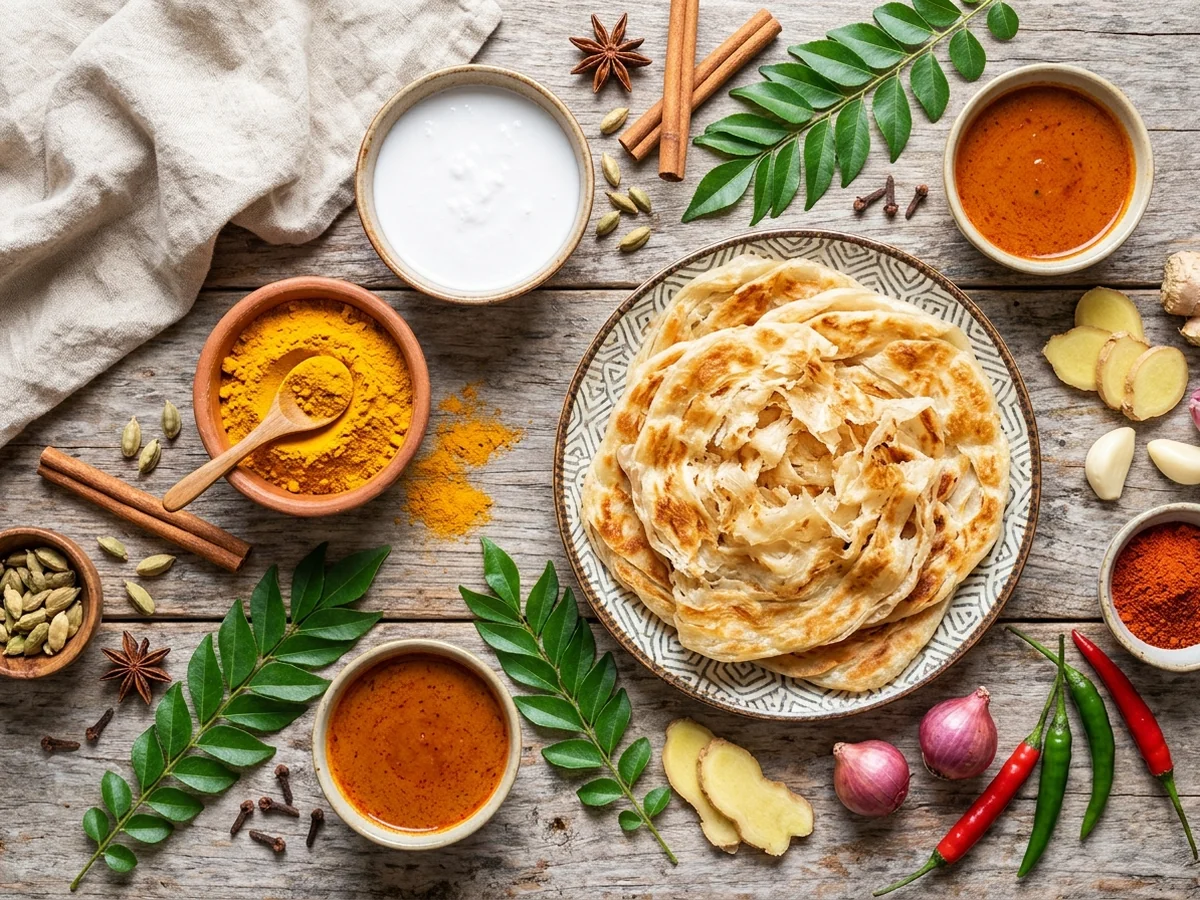
The flavor profile of accompaniments for flatbread relies on a balance of creamy, acidic, and aromatic components. Coconut milk serves as a foundational element, providing a rich, velvety texture that mellows the intensity of the spices.
Color and brightness are essential to these dishes. Turmeric is frequently used to impart a vibrant golden hue to the base, while tamarind introduces a necessary sharp acidity that cuts through the richness of the fats.
Aromatic depth is achieved through a specific blend of whole spices. Common Malaysian curry paste ingredients often feature these elements to create a complex foundation:
- Cardamom for floral notes
- Cloves for warmth
- Star anise for a subtle sweetness
Vegetarian Dipping Sauce Variations
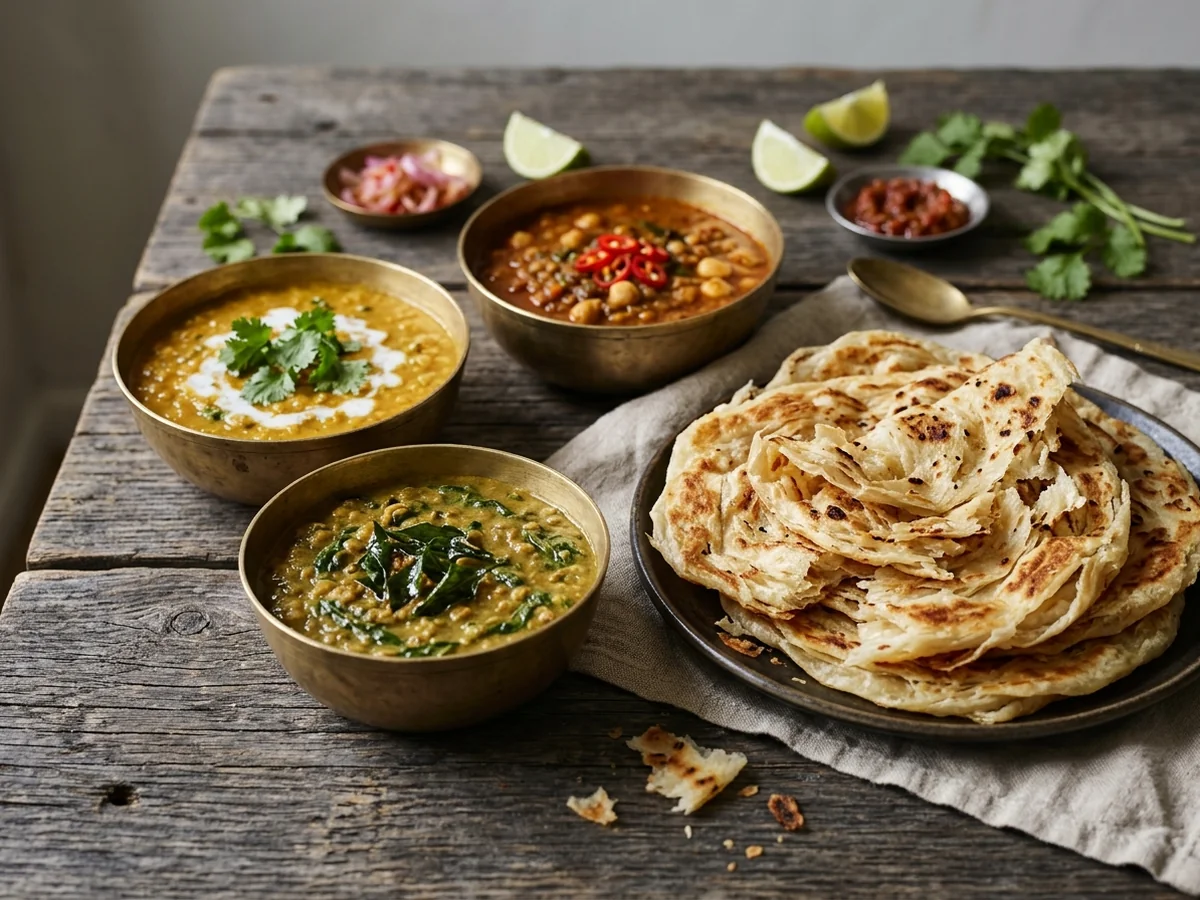
You can easily customize vegetarian dipping sauces for flatbread by adjusting the liquid content or incorporating diverse plant-based ingredients to suit your texture preference. These versatile options provide a hearty base that complements the crispy layers of the bread.
- Lentils serve as a classic, protein-rich foundation that can be simmered with extra water for a thinner, soup-like consistency or reduced longer for a thicker, spreadable dip.
- Roasted root vegetables add a natural sweetness and earthy depth when blended into a smooth, savory base.
- Spiced chickpeas offer a satisfying texture contrast, especially when lightly smashed into a rustic sauce.
- Freshly sautéed greens provide a vibrant color and mild flavor profile to balance heavier, spiced legume mixtures.
How to Serve Roti Dips

To serve these dishes effectively, present your flatbread fresh and warm immediately after cooking. This ensures the texture remains soft and pliable, which is essential for the best experience.
When dining, use your hands to tear small pieces of the bread. You can then use these morsels to scoop up your preferred savory accompaniments.
Maintaining the right temperature for your flavorful liquids is key to a comfortable meal. Follow these tips to keep your pairings warm:
- Use small, pre-warmed ceramic bowls to hold individual portions of sauce.
- Place serving dishes over a low heat source, such as a tea light warmer, if enjoying a slow meal.
- Keep the main batch covered to prevent a skin from forming on the surface.
Balancing Spice in Curry Dips

You can effectively manage the heat of your flatbread accompaniments by incorporating coconut milk or yogurt to mellow the intensity of chili-based ingredients. Achieving the right consistency involves simmering the base until it coats the back of a spoon, preventing it from becoming too runny or overly thick.
| Ingredient | Flavor Impact | Texture Contribution |
|---|---|---|
| Coconut Milk | Adds creaminess | Increases silkiness |
| Yogurt | Provides tanginess | Thickens the base |
| Lentils | Earthiness | Creates body |
Common mistakes include adding too much liquid early on, which prevents proper reduction, or failing to season sufficiently, resulting in a bland profile. Always taste and adjust acidity with tamarind or heat with sambal incrementally.
Storing Your Curry Dips
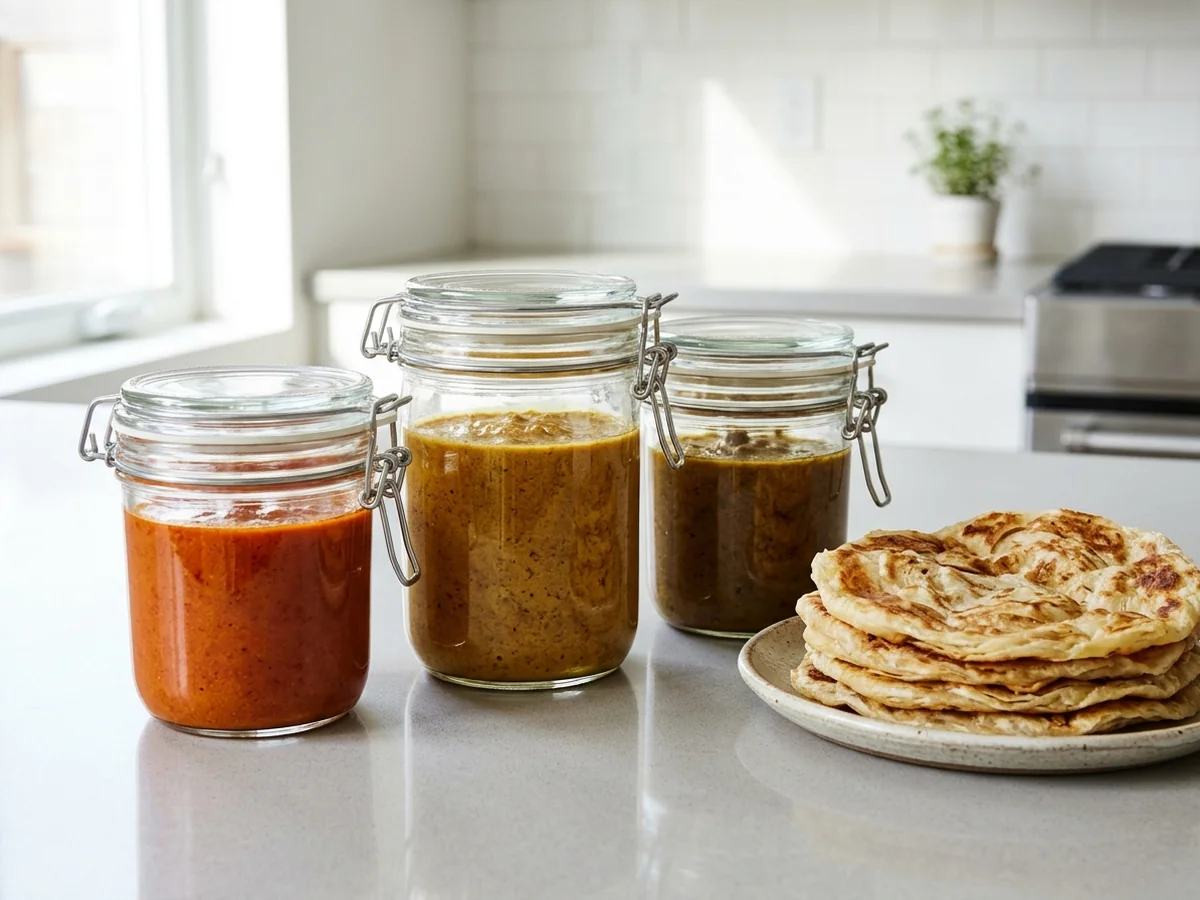
Homemade curry accompaniments stay fresh in the refrigerator for up to three days when kept in airtight containers. Ensure the sauces have cooled completely to room temperature before transferring them to the fridge to maintain food safety and flavor quality.
When you are ready to serve, reheat your sauces gently over low heat on the stovetop. If the consistency thickens during storage, stir in a small splash of water or broth to restore the desired texture. Avoid high heat, as this can cause coconut milk or dairy components to separate or curdle.
For longer storage, you can freeze your curry sauces for up to one month. Use freezer-safe bags or containers and label them clearly with the date.
Allergens in Roti Dips

Traditional accompaniments for flatbread often contain hidden allergens that require careful attention during preparation. Common ingredients like shrimp paste and various nuts are frequently used to build depth in these flavorful mixtures.
- Check every label on store-bought pastes carefully, as they may contain hidden shellfish, peanuts, or tree nuts.
- Replace traditional shrimp paste with miso or soy sauce to achieve a similar umami profile without the allergen.
- Use sunflower seeds or toasted coconut as a nut-free alternative for adding texture to your sauce.
- Verify that your curry thickeners are free from potential wheat or soy cross-contamination if you are managing specific dietary restrictions.
- Prepare your own blends at home to maintain total control over every ingredient included in your meal.
FAQ
What is the most common curry served with Roti Canai?
Dhal is frequently served as the standard vegetarian dip alongside this flatbread. Its mild flavor profile balances the rich, buttery texture of the bread.
Can Roti Canai be served with vegetarian dips?
Yes, there are many popular vegetarian dipping sauces for flatbread that pair perfectly with the dish. Lentil-based curries or spicy vegetable-heavy stews are common choices for those seeking meat-free accompaniments.
What ingredients are needed for a basic dhal?
A traditional Malaysian dhal recipe typically relies on lentils as the primary base, which are then flavored with spices. Common additions include turmeric for color and sometimes curry leaves to enhance the aromatic profile.
How should Roti Canai be eaten?
It is customary to eat this dish by tearing off bite-sized pieces of the bread with your hands. You then use these pieces to scoop up the various accompaniments and flavorful bowls provided for the meal.
What provides the heat in sauces served with Roti Canai?
Sambal is a widely used chili-based condiment that provides a significant boost of heat when served on the side. Depending on your preference, you can stir it into your curry or use it as a standalone dip.
Why is tamarind used in some curry dips?
Tamarind is frequently incorporated into fish-based curries to introduce a necessary layer of acidity. This tanginess helps cut through the richness of coconut milk often found in these sauces.
Conclusion
The best way to enjoy these dishes is to experiment with different textures and heat levels to find your preferred balance. Whether you choose a simple lentil dhal or a rich meat-based stew, your selection of flavorful accompaniments for flatbread defines the overall experience. Start by preparing a classic dhal to master the traditional flavor profile before moving on to bolder, spicier options. Once you have a reliable base, you can easily adjust the seasoning and consistency to suit your personal taste at home.
You might also like: Creative Rice Paper Recipes for Easy Snacks & Wraps