How to Make Milanesa Napolitana with Melted Cheese
Introduction
You can prepare a delicious milanesa napolitana by layering a breaded, fried beef cutlet with savory tomato sauce, sliced ham, and melted cheese. This hearty dish is a staple of Argentine cuisine, cherished for its satisfying combination of textures and flavors.
This guide provides a comprehensive approach to crafting the perfect meal at home. You will learn how to select the best cuts of beef for optimal tenderness and master the breading technique to ensure your crust stays crisp. We also cover the essential milanesa napolitana toppings and expert tips for melting the cheese without softening your golden base. Whether you are curious about the difference between baking vs frying milanesa or need troubleshooting advice for your breading, this walkthrough ensures consistent, restaurant quality results in your own kitchen.
What Is Milanesa Napolitana

This iconic dish is a beloved staple of Argentine cuisine, featuring a golden, breaded meat cutlet topped with savory layers. It transforms a standard fried protein into a hearty, comforting meal by incorporating classic deli and pantry ingredients.
The preparation relies on stacking specific elements to create a harmonious flavor profile. While variations exist across households, the core components typically include:
- Thinly pounded breaded meat
- Salty slices of ham
- Rich tomato sauce
- A generous layer of melted cheese
By layering these items over the fried base, the milanesa napolitana gains its signature richness. The result is a satisfying, textured experience that balances the crunch of the breading with the softness of the toppings, making it a centerpiece for family gatherings throughout the region.
Selecting The Right Beef
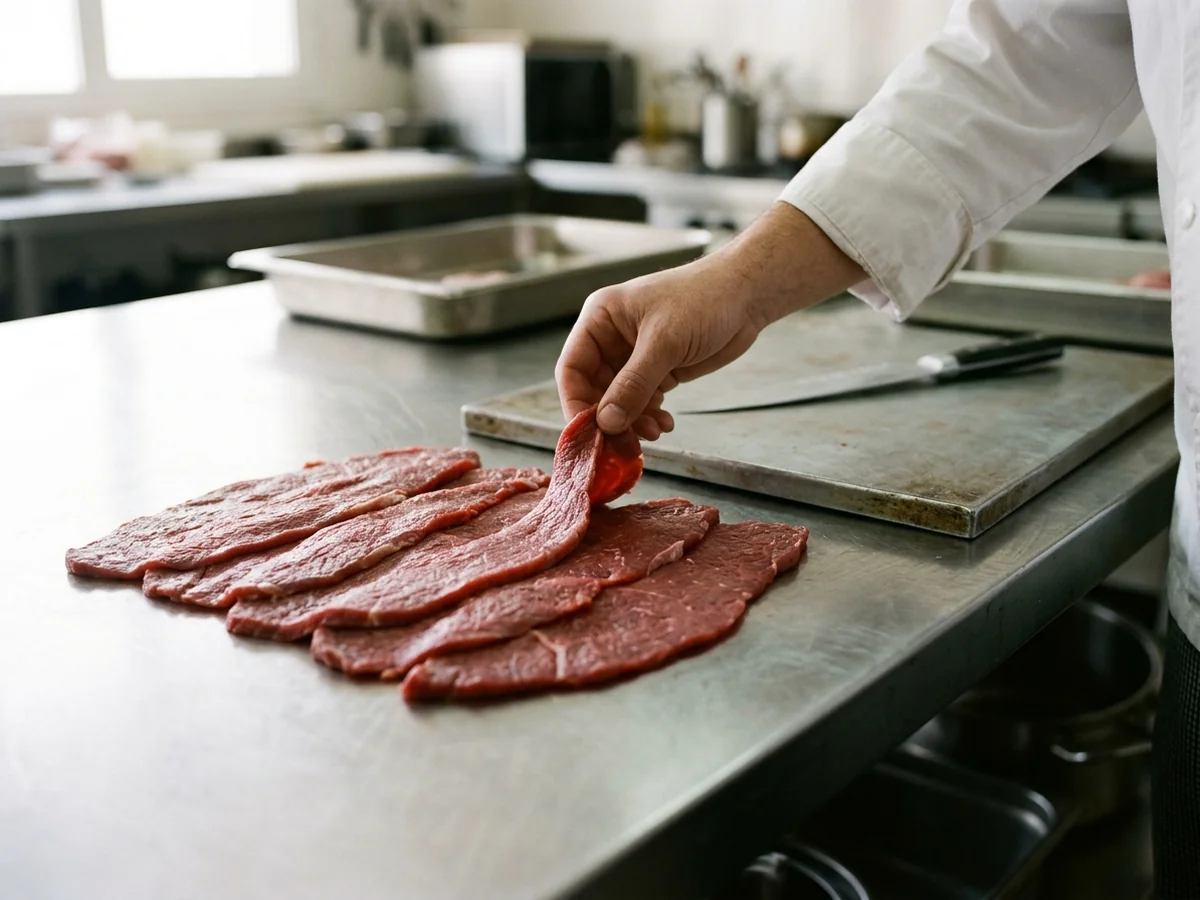
Choosing lean, uniform cuts is essential for the best results when preparing this dish. Among the best beef cuts for milanesa, top round and eye of round are frequently preferred because they are lean and become tender once properly processed.
Before you begin breading, take a moment to trim any visible fat or gristle from the edges of the steaks. Removing these tough bits ensures the meat maintains a consistent texture and prevents the slices from curling or shrinking in the pan. Once trimmed, use a meat mallet to pound the beef until it is very thin. This step is crucial for achieving uniform cooking throughout the process, ensuring the center reaches the proper temperature without burning the exterior. You want each piece to be thin enough to cook quickly yet sturdy enough to hold the breading.
Mastering The Breading Process
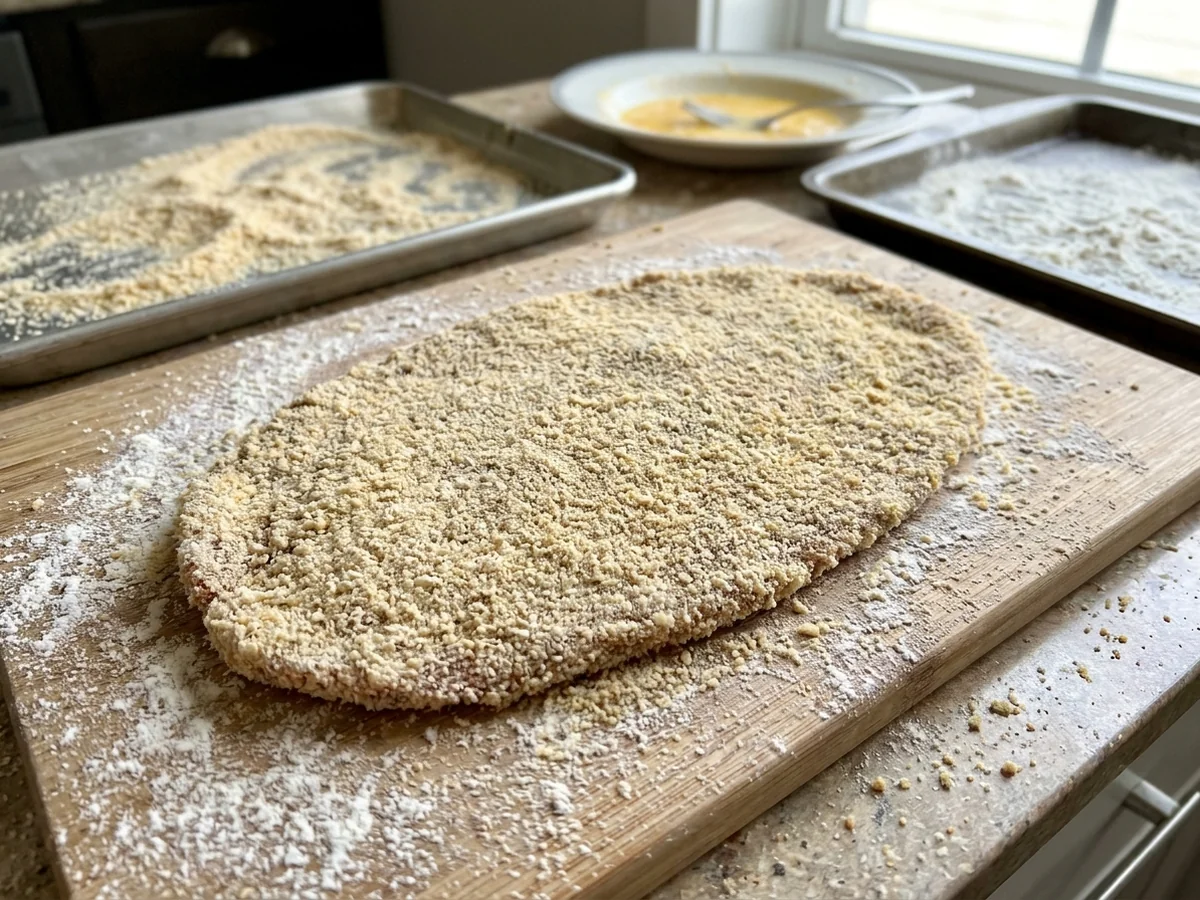
To achieve a perfectly crisp coating, you must follow a methodical three-step sequence that ensures every inch of the meat is properly sealed. Mastering how to bread beef for milanesa creates a protective barrier that keeps the interior succulent while providing a satisfying crunch in every bite.
- Begin by lightly dusting the pounded meat in flour, shaking off any excess to ensure a thin, even layer.
- Dredge the floured cutlet thoroughly in a well-beaten egg wash to act as the primary adhesive.
- Press the meat firmly into your breadcrumbs to anchor the coating securely to the surface.
- For an exceptionally crunchy texture, swap standard crumbs for Panko breadcrumbs.
- Always refrigerate the prepared cutlets for twenty minutes before cooking to help the breading set firmly.
Baking Versus Frying Methods
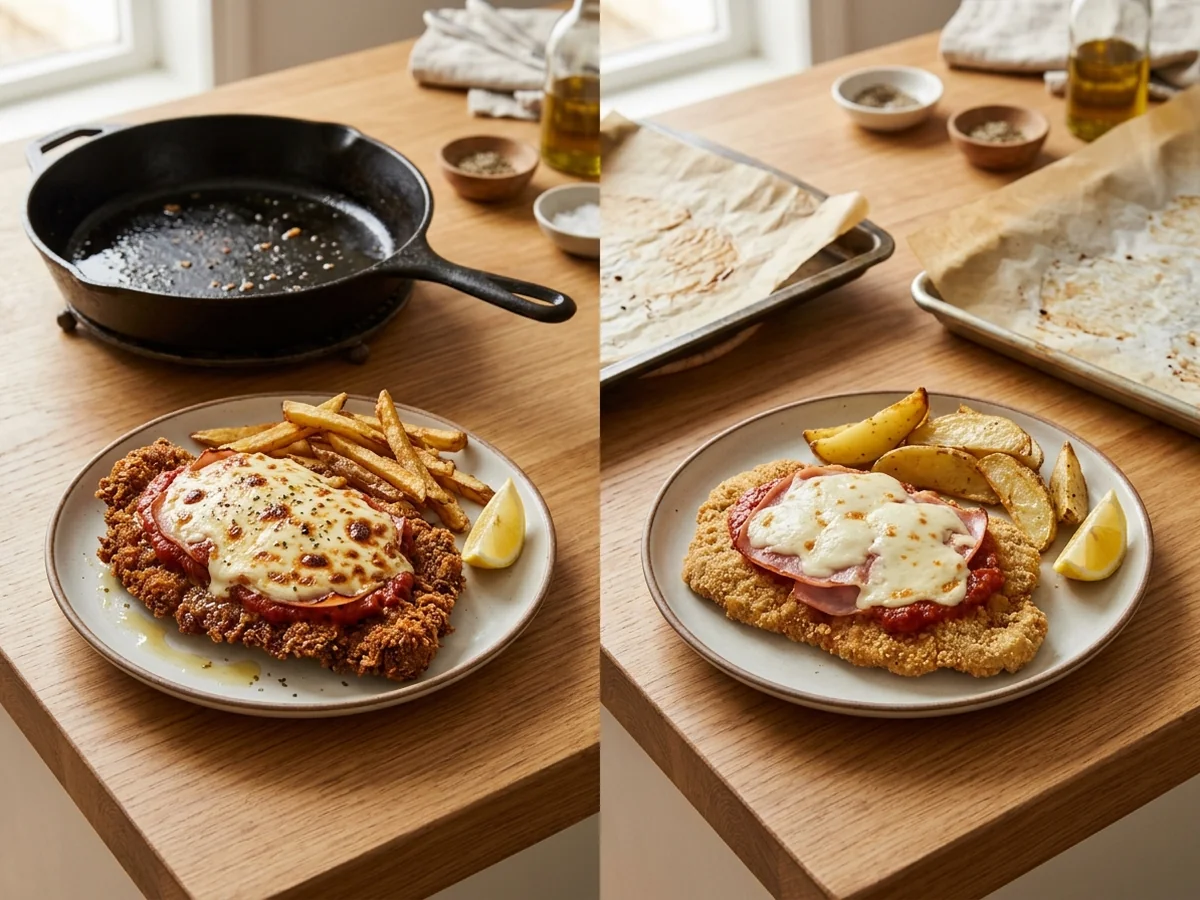
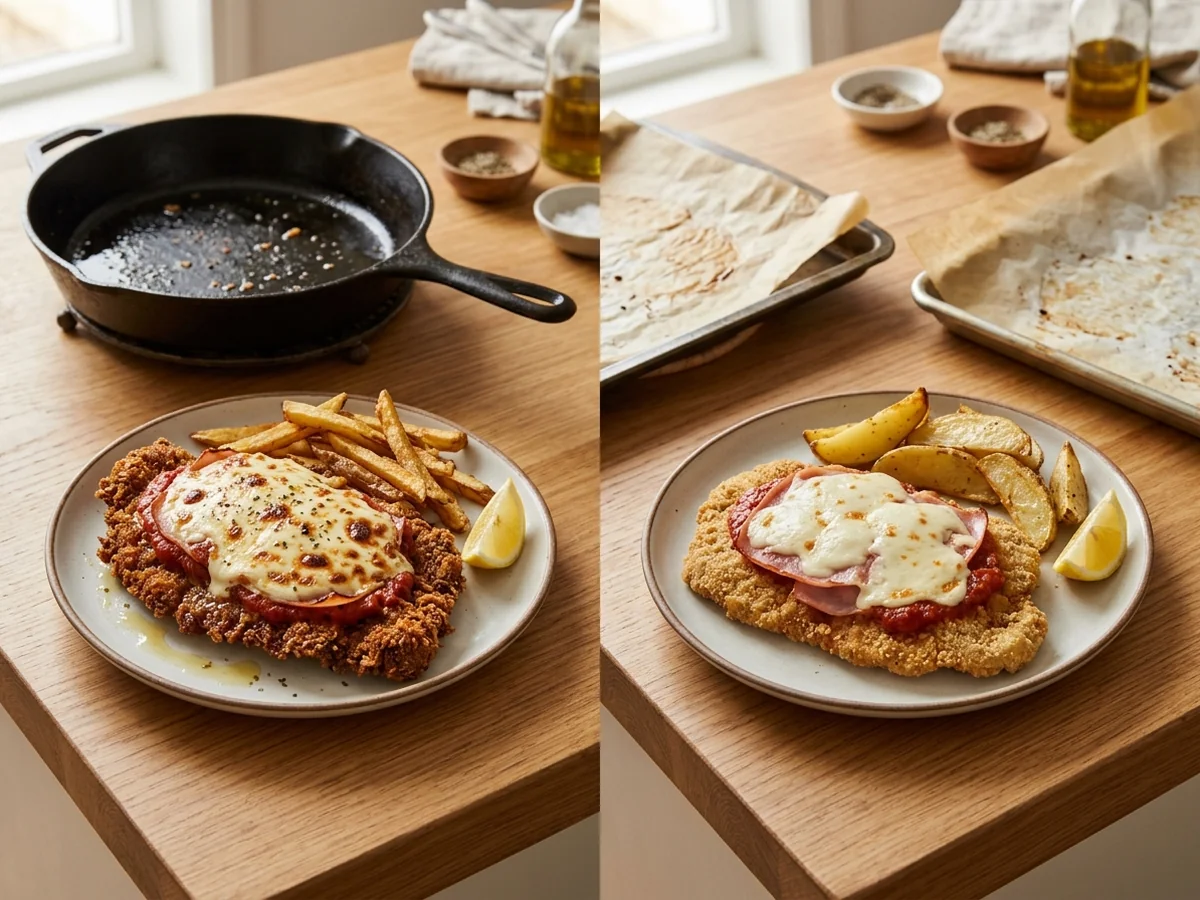
Frying in a cast iron skillet creates a classic, golden, and crunchy exterior, while oven-baking offers a convenient, lower-fat alternative for preparing a milanesa napolitana.
| Attribute | Frying | Baking |
|---|---|---|
| Texture | Extra crispy | Lightly crunch |
| Fat Content | Higher | Lower |
| Cooking Speed | Fast | Moderate |
Choosing to bake your meal is an effective way to reduce overall oil intake without sacrificing flavor. To ensure the breading stays crisp in the oven, place the meat on a wire rack set over a baking sheet to allow hot air to circulate underneath. Avoid overcrowding the pan and use a high-heat setting to mimic the browning effect of a skillet.
Layering The Essential Toppings
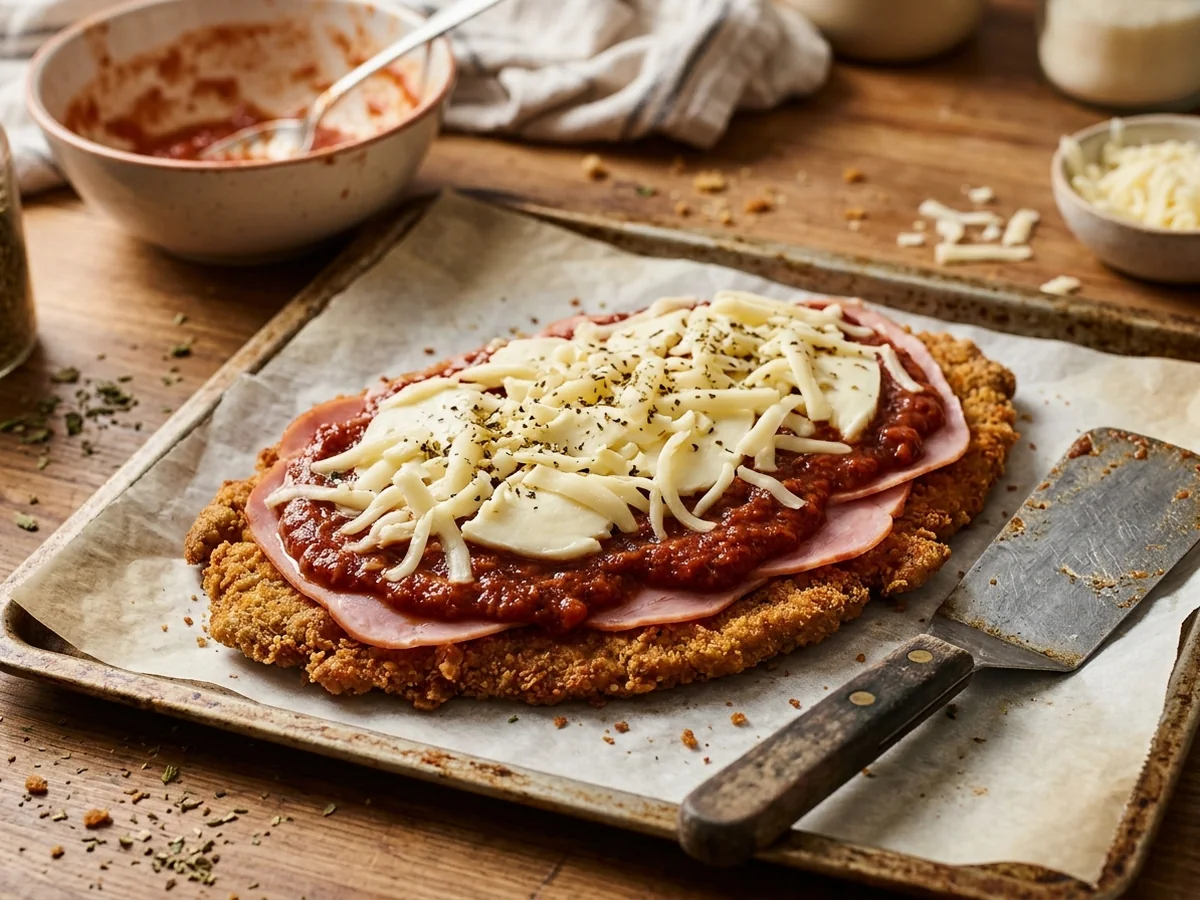
To assemble the dish correctly, follow a specific sequence: place a slice of ham over the cooked meat, add a layer of thick tomato sauce, and finish with a generous portion of mozzarella cheese. This order ensures that the flavors meld while protecting the integrity of the breaded base.
Using a thick, low-moisture sauce is critical for success. Excess liquid in the tomato base is the primary cause of a soggy crust, which ruins the texture of the breading. If your sauce appears thin, simmer it longer before application to concentrate the solids.
- Start with the hot, freshly cooked meat.
- Layer the ham evenly across the surface.
- Spoon on the thickened tomato sauce.
- Top with shredded or sliced mozzarella cheese.
- Garnish with fresh herbs, such as oregano, before serving.
Avoiding Soggy Milanesa Crust
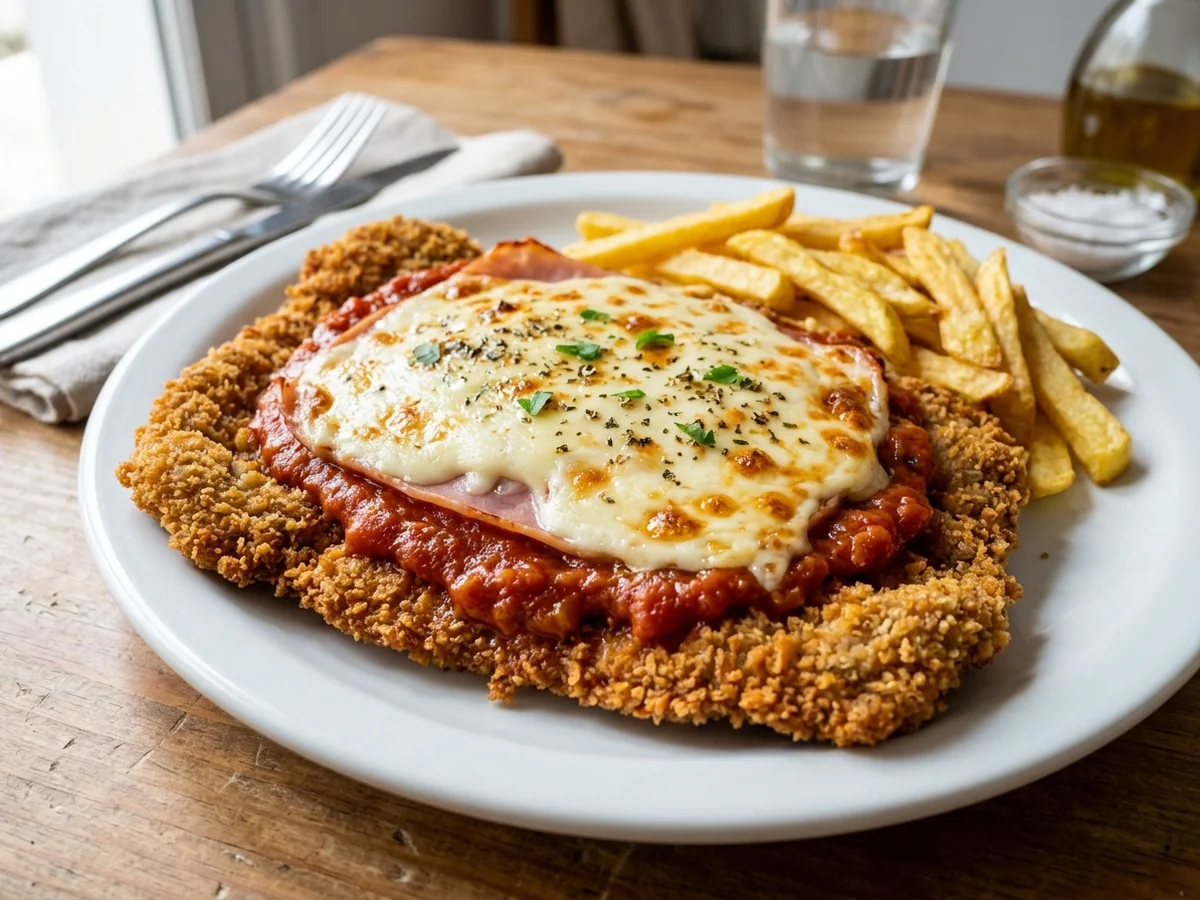
Preventing a soft or soggy coating relies on managing moisture levels during assembly and choosing the right melting method. By controlling how you apply your toppings and heat, you can keep the breading crisp and golden.
- Use a thick, low-moisture tomato sauce to ensure the liquid does not seep into the breaded surface.
- Apply your toppings immediately before placing the meat under the broiler to minimize the time the crust spends absorbing moisture.
- Keep the heat source elevated and watch closely, as high temperatures can quickly burn the cheese before the center is warm.
- Store leftovers in an airtight container with a paper towel to absorb excess humidity, and reheat in a hot oven rather than a microwave to restore the crunch.
Serving And Pairing Suggestions
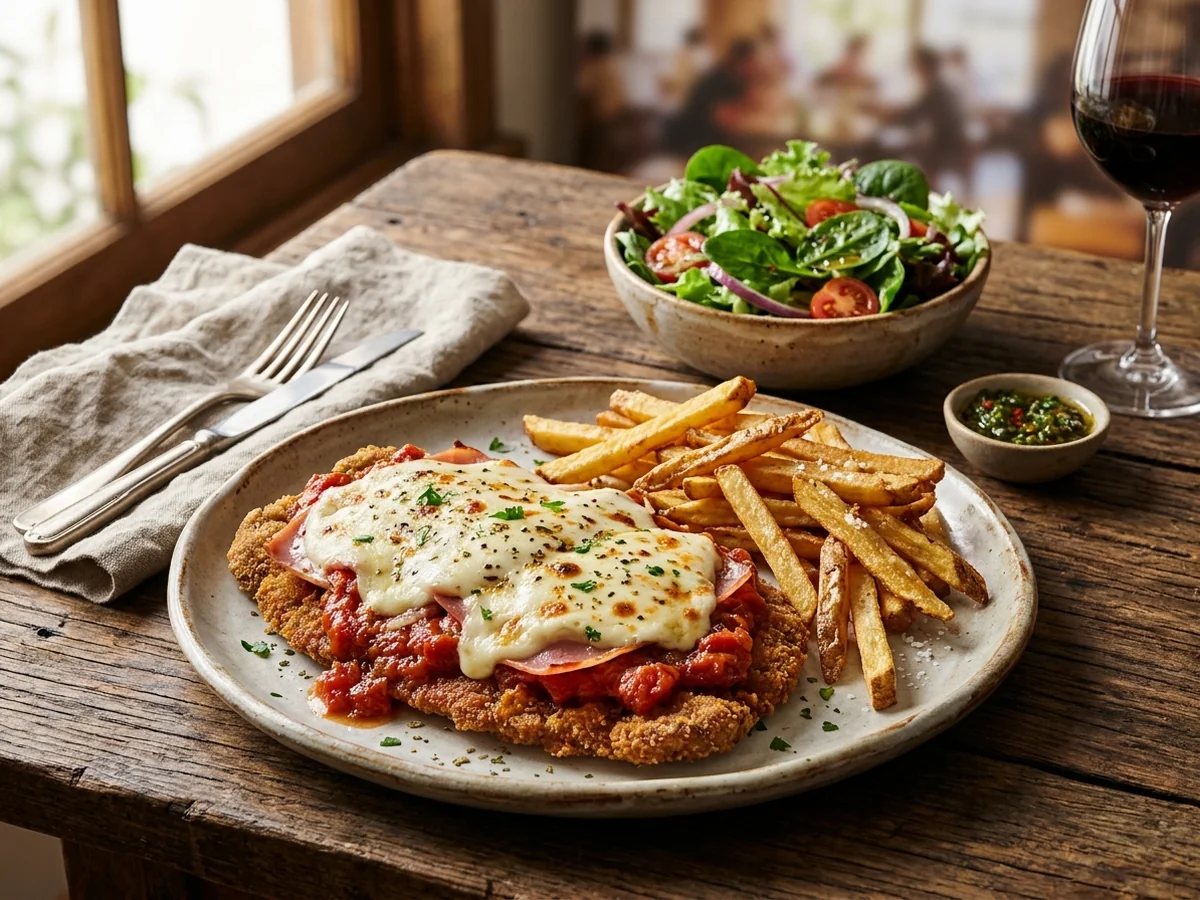
Pair this hearty dish with classic starch-heavy sides or crisp, refreshing salads to balance the richness of the melted cheese and breaded meat. Because this meal is a cornerstone of Argentine comfort food, the traditional accompaniment is often something simple that complements the savory profile of the beef and tomato sauce.
Consider serving your meal with one of these popular side dishes:
- Crispy french fries, which are a traditional choice for this meal.
- Creamy mashed potatoes to soak up any remaining tomato sauce.
- A light, vinegar-based green salad to cut through the heavy, melted toppings.
- Sliced tomatoes with fresh herbs for a clean, acidic contrast.
The popularity of this dish stems from its ability to provide warmth and satisfaction, making it a beloved staple in homes across Argentina.
FAQ
What is the best cut of meat for milanesa?
The best beef cuts for milanesa are lean, tender options like top round or eye of round. These cuts benefit from being pounded thin, which helps them cook quickly and evenly without becoming tough.
How do you stop the breading from falling off?
To keep the breading intact, press the breadcrumbs firmly into the meat during the coating process. Ensure the beef surface is dry before applying the flour, egg wash, and breadcrumbs to create a secure bond.
Can you make this dish in the oven?
You can certainly prepare milanesa napolitana in the oven for a lighter alternative to frying. Baking allows the crust to stay crisp while the cheese melts, provided you keep the broiler setting short to avoid burning the mozzarella.
What sides go best with Milanesa Napolitana?
Traditional sides for this dish include crispy French fries or creamy mashed potatoes. A fresh side salad with a light vinaigrette also provides a nice balance to the richness of the melted cheese and ham.
Why is it called Napolitana if it is from Argentina?
The name reflects the influence of Italian heritage on Argentine cuisine, though the dish itself is recognized as a local creation. It is a staple of Argentine culture that combines breaded meat with classic pizza-style toppings.
Conclusion
The final step in this process is deciding whether to serve your meal immediately or prepare the components ahead of time to streamline your kitchen workflow. If you are ready to eat, place the assembled milanesa napolitana under the broiler just until the cheese is bubbly and golden. This ensures the breading remains crisp while the topping reaches the perfect texture. Whether you choose to pair it with classic fries or a simple fresh salad, your next move is to gather your ingredients and start the breading process for a comforting, restaurant-quality dinner at home.
You might also like: Creative Rice Paper Recipes for Easy Snacks & Wraps